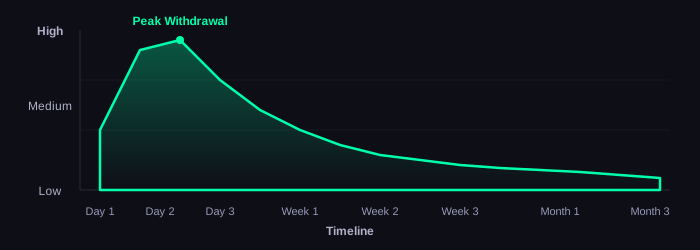
If you're planning to quit nicotine or just started quitting, you probably have a thousand questions about what's coming. How bad will it get? How long does it last? When do you start feeling normal again? The answer is: it's intense for about a week, uncomfortable for 3-4 weeks, and psychologically rough for months. But it's also manageable, and knowing what to expect helps you prepare instead of panicking.
This guide walks you through nicotine withdrawal from day one through day 90. It covers both the physical and emotional symptoms, and explains the neurological reason each one happens. The timeline varies slightly between individuals, but the general pattern is consistent for most people.
Days 1-3: Acute withdrawal (the peak)
What's happening: Nicotine leaves your system within 48-72 hours. As it disappears, your dopamine system crashes. Your brain has spent months or years adapted to constant nicotine, which floods dopamine receptors. Now that dopamine is gone, and you have fewer receptors because your brain adapted by downregulating them. The combination creates a neurochemical crisis. This is legitimate withdrawal, not weakness.
Physical symptoms: Headache (often intense), body aches, increased appetite, chills or feeling cold despite warm temperatures, fatigue, difficulty concentrating, tremors or shakiness, increased heart rate or heart palpitations. Many people describe it as feeling like a mild flu, except the symptoms come in waves.
Emotional symptoms: Irritability and impatience (you will snap at people), anxiety, restlessness, intense cravings, brief moments of depression, feeling like you made a terrible mistake. Your emotional regulation is compromised because the neurotransmitters that support mood stability are depleted.
Sleep: Highly disrupted. You're likely to feel tired but unable to sleep, or sleep very lightly. This compounds the emotional symptoms because sleep deprivation triggers mood dysregulation.
What this feels like: The worst day is typically day two. Day one you're still running on momentum and adrenaline. By day two, the acute neurochemical crash is in full effect, sleep has been disrupted, and the cravings are extreme. This is when most people relapse.
What helps: Knowing that this is temporary is half the battle. The absolute peak lasts 24-48 hours. By hour 72, your brain has stabilized somewhat. This isn't comfort, but it's a timeline. Get through day two. Use a craving interruption tool like IOn Reclaim if you have one. Move your body. The worst usually passes by evening of day two.
Days 4-7: Acute withdrawal fading (but still rough)
What's happening: The neurochemical crisis is easing. Nicotine is mostly out of your system by day four. Your dopamine receptors are starting to upregulate (your brain is making more of them). The worst of the biological emergency has passed, but you're not close to normal yet. What replaces acute withdrawal is intense psychological cravings because your brain still expects nicotine in response to all your regular triggers.
Physical symptoms: Headaches often linger (can last 5-7 days for heavy users). Appetite is still elevated, sometimes extremely. Energy is still low. Concentration is still poor. The body aches and chills usually fade by day 4-5. Some people experience diarrhea or constipation as their digestive system adjusts.
Emotional symptoms: Irritability is still high but slightly less hair-trigger. Anxiety often peaks around day 4-5 (psychological cravings intensify as acute withdrawal fades). Depression can set in around day 4-5. This is because nicotine was providing mood support through dopamine flooding, and that's now gone. Your brain needs time to restore its own dopamine production, which takes weeks.
Cravings: Cravings are now less about neurochemical desperation and more about habit and psychological dependence. If you used to vape with coffee, your coffee trigger is firing right now. If you smoked after meals, meal triggers are firing. The intensity is lower than day two, but the frequency is higher because every routine situation is now a cue.
Sleep: Still disrupted, but often slightly improving by day 6-7. Some people sleep much better, others don't sleep well for 2-3 weeks. The variation is individual.
What this feels like: You survived the worst, and you know it. But you're exhausted, you're irritable, and the psychological cravings are intense. This is when people sometimes think "I'm past the peak, maybe I can just have one." Having one restarts the entire withdrawal timeline for your brain, so don't. This is the most dangerous window for relapse because you feel well enough to question your decision, but not well enough to endure the cravings without support.
What helps: Change your routines and triggers. If morning coffee is a cue, take it somewhere different. If breaks are a cue, do something different during breaks. You're not avoiding triggers, you're changing what triggers lead to. Eat more. Sleep matters. Movement matters. This is the week where behavioral change is more important than willpower.
Weeks 2-3: Acute phase ending, psychological phase intensifying
What's happening: The acute neurochemical withdrawal has mostly resolved by day 10-14. Your dopamine system is stabilizing. But the psychological dependence is now front and center. Your brain learned to pair nicotine with dozens of situations (stress, boredom, social moments, transitions between activities). All those associations are still firing. The good news is your brain isn't in crisis mode anymore. The bad news is you now have to psychologically manage triggers without the chemical desperation driving you toward relapse.
Physical symptoms: Most are fading. Headaches usually resolve by day 7-10. Energy is improving. Appetite is still elevated but normalizing. Concentration is improving. Some people still experience sleep disruption, but most sleep somewhat better by week two.
Emotional symptoms: Irritability is fading. Anxiety often gets better around day 10-12. Depression can persist, especially for people with baseline mood issues. This is because your brain's dopamine production hasn't fully restored. You might feel a flat, low-motivation state rather than active sadness. This usually starts improving by week three as your dopamine system continues to normalize.
Cravings: Cravings are less intense than week one, but more psychological and persistent. You're not craving because your brain is in chemical crisis. You're craving because you've learned to pair a behavior with dopamine rewards, and that association still exists. A craving lasts minutes to an hour, and using a disruption tool (interrupting your attention, changing location, engaging differently) is very effective at this stage.
Sleep: Usually near normal by week two, though some people have continued disruption. If sleep is still very poor by week three, it's worth exploring whether anxiety or depression is driving it, and whether professional support would help.
What this feels like: You feel almost normal some days. You have moments where you don't think about nicotine at all, and those moments feel like freedom. Then a trigger fires (a particular situation, a person, a time of day) and you're craving again. The pattern is irregular, which is confusing. You're not in crisis, but you're not fully comfortable either.
What helps: Build new associations. If you always vaped during stress, develop a different stress response (walking, breathing, talking to someone). If you paired nicotine with transitions between activities, create a new ritual. After 2-3 weeks of consistent new behavior in response to a trigger, the new association becomes more automatic. IOn Reclaim tracks these patterns and helps you notice when triggers are firing so you can respond with intention instead of automaticity.
Weeks 4-12: The adjustment phase
What's happening: Acute withdrawal is over. Your dopamine system is continuing to stabilize. Your brain is upregulating dopamine receptors and restoring natural dopamine production. This process takes weeks. The good news is you're no longer in a biological crisis. The challenging part is that your brain's dopamine is still lower than optimal, and you're psychologically navigating a lifestyle change.
Physical symptoms: Mostly resolved. You might have occasional food cravings or weight gain (your metabolism is adjusting, and appetite suppressants are gone). Some people experience increased energy by week four as their cardiovascular system improves. Taste and smell continue improving throughout this period.
Emotional symptoms: The flat, low-motivation state (anhedonia) often lingers through week 6-8 for heavy nicotine users. This is because dopamine receptors take time to fully upregulate and dopamine production takes time to restore. You might feel like things that used to be fun aren't that fun anymore. This is temporary, but it can be demoralizing if you don't understand that it's a withdrawal symptom, not a permanent change. By week 8-10, most people start feeling more interest in activities again as their dopamine system continues normalizing.
Cravings: Frequent cravings in week three usually decline to occasional cravings by week four. They're triggered by specific situations, not random. Many people notice cravings are triggered by stress, social situations (if peers still use nicotine), alcohol, or certain locations. These are psychological triggers, and they're manageable through behavioral strategies or avoidance of the trigger temporarily.
Sleep: Usually normal by week four. If sleep is still disrupted, it's often related to ongoing anxiety rather than nicotine withdrawal itself.
What this feels like: You're not struggling like you were in week two. You're functional. But you might feel like something's missing, or your motivation is lower than usual. You might also get a false sense of security by week 6-8 and underestimate how much your brain still needs stability. This is another relapse-risk period, not because you're in crisis, but because the difficulty is subtle enough that you might think you can handle just one.
What helps: Expect the anhedonia phase. Knowing it's temporary and that your dopamine system is healing helps. Exercise accelerates dopamine restoration, so movement helps. Avoid alcohol in week four and beyond if possible, because alcohol typically triggers cravings in people who are past acute withdrawal. Connect with your health progress through IOn Reclaim's timeline, which shows concrete improvements (better breathing, better exercise capacity, taste returning) even if you don't feel emotionally great yet.
Months 2-3: The recovery and integration phase
What's happening: By month two, your dopamine system is nearly back to baseline. Your brain's dopamine receptors are normalized. Your dopamine production is restored. The reason you might not feel fully great yet isn't withdrawal, it's that you're psychologically adjusting to living without nicotine. If nicotine was your primary stress-management tool, your primary boredom-management tool, or your primary social ritual, you're now discovering new ways to handle those situations.
Physical symptoms: None related to withdrawal. You might notice you're getting sick less (your immune system is recovering). Your lung capacity is improving. Your cardiovascular system is improving. These are positive changes that might not be obvious but are happening.
Emotional symptoms: Most people feel significantly better by week eight. If depression or anhedonia persists beyond day 21-30, it's worth exploring whether depression is a separate issue unrelated to withdrawal, and whether professional support would help. Some people use nicotine to self-manage depression or anxiety, and quitting surfaces those underlying issues.
Cravings: By month two, cravings are usually triggered by specific situations rather than random internal impulses. A difficult day, stress, seeing a friend who vapes, alcohol, driving a certain route. These are psychological and contextual, not neurochemical. They're also much more manageable because your brain isn't in withdrawal anymore.
What this feels like: By month two, most people feel like they're back to normal or better. Your breathing is better. Your energy is better. Your sense of taste is back. You're sleeping normally. You're not fighting cravings constantly. But you might still get occasional strong cravings if you encounter a specific trigger (stress, a person, a situation). This is expected and doesn't mean you're failing. It means you're human and you learned to associate nicotine with things that haven't gone away.
What helps: The real work in month two and beyond is identity integration. You're no longer "someone trying to quit." You're "someone who quit." That shift matters psychologically. Notice your improvements. Use them as data that this was the right decision. When cravings hit (and they will, occasionally, for years in some cases), treat them as neurological memories, not messages that you should use nicotine. Your brain learned something and it's reminding you of it. That doesn't mean you should act on it.
Beyond three months: Long-term stability
What's happening: You're past withdrawal. Your dopamine system is normalized. The occasional cravings that still occur are psychological associations, not withdrawal symptoms. These will continue for varying lengths of time. Some people stop getting cravings around month three or four. Some people get occasional cravings for years. This is normal and doesn't indicate failure.
Relapse risks: The highest risk periods are week one (acute withdrawal), week two-three (psychological cravings coinciding with fatigue and mood dysregulation), and month four-six (when the novelty of quitting wears off and people get complacent). After six months, relapse risk is much lower, but stress, major life changes, and exposure to peers using nicotine can trigger relapses even after a year.
What actually changes long-term: Your sense of taste and smell are fully restored. Your lung function is improving (continues for months). Your cardiovascular system has recovered. Your sleep is better. Your skin is better. Your body is healing in ways you can measure. These aren't subtle changes. Most people notice significant quality-of-life improvements by month four-six.
What helps: Remember why you quit. Keep that reason active. If you quit for health, notice your health improving and use that as reinforcement. If you quit for finances, track the money you're saving. If you quit for a relationship, notice the improvements there. These aren't distractions from cravings, they're reminders that quitting was worth it. Use IOn Reclaim's recovery timeline to see the physical timeline of your body healing. Use behavioral strategies for triggers if they still occur. Most importantly, be patient with yourself. This is one of the hardest neurochemical changes your brain will go through, and you're managing it.